

History of the institute
Origins and Formation
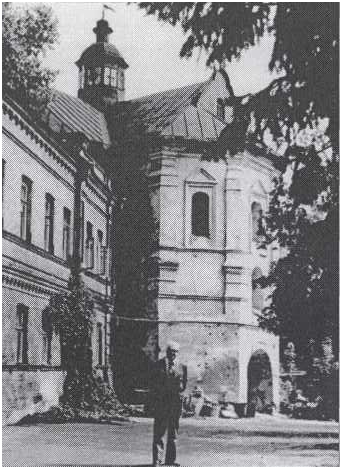
The history of the Institute dates back to 1952. In the post-war years, the Department of Physical Chemistry of Metallurgical Processes existed within the Institute of Ferrous Metallurgy of the Academy of Sciences of the Ukrainian SSR. It was headed by the renowned scientist Ivan Mykytovych Frantsevych, who was then the Head of the Department of Physical Chemistry at Kyiv University, a Corresponding Member of the Academy of Sciences of the Ukrainian SSR, and a USSR State Prize laureate.
In November–December 1952, this department served as the foundation for the establishment of the independent Laboratory of Special Alloys of the Academy of Sciences of the Ukrainian SSR. The laboratory was allocated the grounds of a partially destroyed farmyard of the Kyiv-Pechersk Lavra. The Laboratory conducted fundamental research and developed materials with high heat resistance, high-temperature strength, and erosion resistance, utilizing powder metallurgy methods extensively.
In 1955, the Laboratory was reorganized into the Institute of Metal Ceramics and Special Alloys of the Academy of Sciences of the Ukrainian SSR. Since 1964, it has been named the Frantsevich Institute for Problems of Materials Science. From its founding until 1973, the Institute was directed by I.M. Frantsevych, Academician of the Academy of Sciences of the Ukrainian SSR (1961) and Hero of Socialist Labor of the USSR (1969).
The primary direction of the Institute’s scientific activity was founded on the global concept of I. M. Frantsevych: to create new materials with tailored properties for extreme operating conditions, based on the results of fundamental research in physical and inorganic chemistry, physical materials science, solid-state physics, and the mechanics of deformable solids.
A crucial feature of the Institute was the inclusion of an Experimental Production Department (EPD) within its structure, designed for the rapid practical implementation of scientific developments. Consequently, as part of the Institute’s role as a scientific and technical complex, this department evolved into a powerful Special Design and Technology Bureau (SDTB) with its own pilot production facilities.
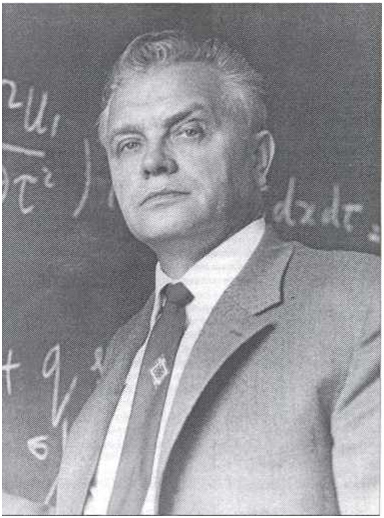
Г.С.Писаренко

І.М.Федорченко
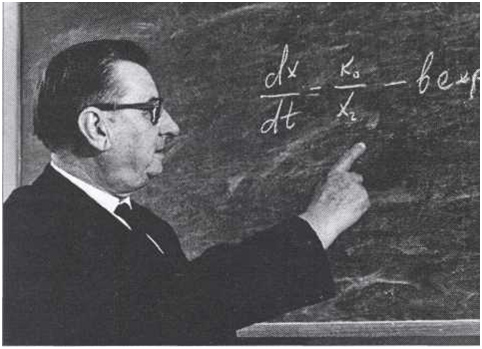
В.М.Єременко

Г.В.Самсонов
Alongside I. M. Frantsevych, the Institute’s origins were shaped by prominent scientists and science organizers, who later became Academicians of the Academy of Sciences of the Ukrainian SSR: G. S. Pisarenko, a scientist in the field of mechanics (strength problems); V. M. Yeremenko, a physical chemist; and I. M. Fedorchenko, a metallurgist and expert in powder metallurgy.
In 1956, this group of scientific leaders was joined by chemist and metallurgist G. V. Samsonov, who arrived from Moscow (later a Corresponding Member of the Academy of Sciences of the Ukrainian SSR).
The older generation of active founders also includes: I. D. Radomyselskyi (a powder metallurgy expert who transferred from the Institute of Ferrous Metallurgy together with I. M. Frantsevych), chemist T. Ya. Kosolapova, and later invitees to the Institute: metal physicist M. P. Arbuzov, ceramist S. G. Tresviatskyi, and rolling mill specialist G. A. Vinogradov.
Each of them made a significant contribution to the major scientific and technical achievements that, as early as the 1960s, brought fame to the IPMS as one of the leading institutes of the Academy of Sciences of Ukraine.
During these years, alongside large-scale fundamental research in the scientific foundations of powder metallurgy, the theory and technology of composite materials, the physical chemistry of surface phenomena, and the chemistry and materials science of refractory compounds, the Institute initiated and organized a number of workshops and sites for the production of new powder materials and raw materials, including the Brovary Powder Metallurgy Plant, the largest of its kind in Europe.
Institute Leadership
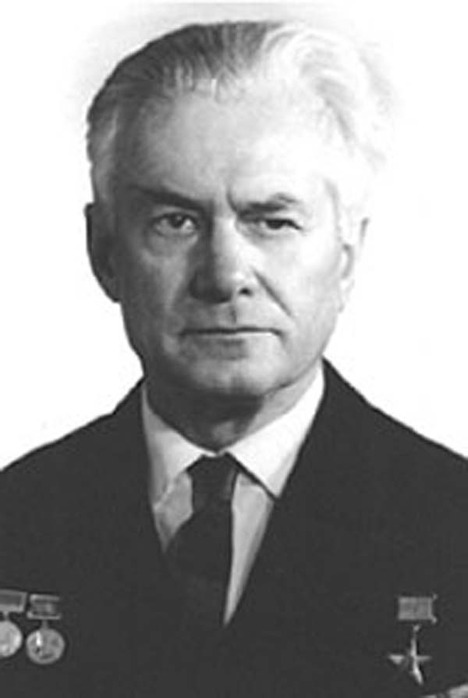
I. M. Frantsevych
The first director of the Institute from the day of its foundation in 1952 until 1973 was Ivan Mykytovych Frantsevych, Academician of the Academy of Sciences of the Ukrainian SSR (1961) and Hero of Socialist Labor of the USSR (1969).
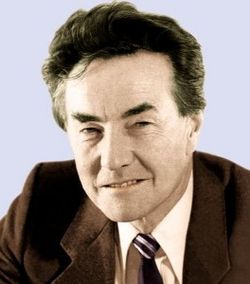
V. I. Trefilov
In 1973, upon the recommendation of I. M. Frantsevych, the renowned metal physicist and Corresponding Member of the Academy of Sciences of the Ukrainian SSR, Viktor Ivanovych Trefilov (later Academician of the Academy of Sciences of Ukraine and the Academy of Sciences of the USSR), was elected as the Director of the IPMS. He led the Institute for 28 years until his untimely death in 2001.
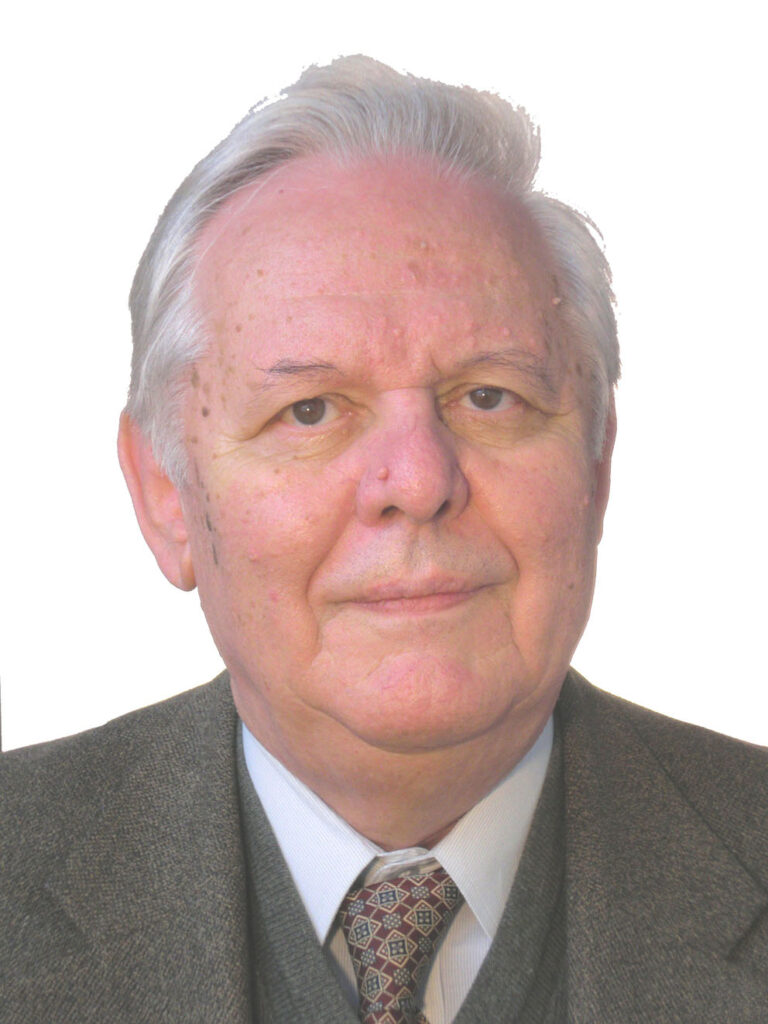
V. V. Skorokhod
From 2002 to 2015, the Director of the Institute was Academician of the National Academy of Sciences of Ukraine Valeriy Volodymyrovych Skorokhod, whose works in the field of the theory of powder metallurgy processes and materials science of composites have gained world recognition.
Yu. M. Solonin
In 2015, Yuriy Mykhailovych Solonin, Academician of the National Academy of Sciences of Ukraine and Doctor of Physical and Mathematical Sciences, was elected as the Director of the Institute.
Stages of Development and Achievements
Rapid Development in the 1970s
The 1970s marked a period of continued rapid growth for the Institute. A new generation of scientists emerged to lead key scientific departments: A. M. Pilyankevich, D. M. Karpinos, Yu. V. Naidich, V. V. Skorokhod, P. S. Kyslyi, G. G. Gnesin, M. D. Glinchuk, A. G. Kostornov, O. V. Kurdyumov, A. I. Raichenko, M. D. Smolin, M. S. Kovalchenko, V. O. Lavrenko, L. M. Lopato, R. F. Voitovych, V. O. Obolonchyk, and others.
Together with V. I. Trefilov, his colleagues and students moved to the IPMS—a brilliant scientific team of metal physicists working in the field of the physics of strength and plasticity of materials. Among them are the now-renowned scientists Yu. V. Milman and S. O. Firstov. Many of them were later elected to the Academy of Sciences of Ukraine.
A new impetus for development was given to the Special Design and Technology Bureau (SDTB) of the IPMS, which not only implemented the Institute’s developments but also conducted its own serious scientific and applied research. For a long time, it was headed by V. S. Pugin, and from 1981, by Doctor of Technical Sciences G. G. Karyuk, an expert in superhard and composite instrumental materials. V. I. Trefilov attracted new creative forces to the Institute, including Academician of the NAS of Ukraine, metal physicist V. I. Arkharov; Corresponding Member of the NAS of Ukraine, metallurgist and materials scientist L. O. Poznyak; and Corresponding Member of the NAS of Ukraine, physicist and head of the Chernivtsi Department of Semiconductor Materials Science K. D. Tovstyuk.
Coordination Activities and International Cooperation
Throughout its existence, the Institute has conducted intensive scientific-organizational and coordination work. For over 30 years, the Institute was the leading institution in the USSR coordinating scientific and technical activities in the field of powder metallurgy. It initiated government decrees that significantly contributed to the development of powder metallurgy science and industry in Ukraine and other USSR republics.
To improve the coordination of work in this field and accelerate the industrial implementation of scientific developments, the Inter-Branch Scientific and Technical Complex (ISTC) “Powder Metallurgy” was established at the IPMS. Its core consisted of the Institute itself, its SDTB, the information and computing center, and pilot production facilities. Approximately 20 major institutes, design organizations, and enterprises of the USSR participated in the ISTC’s activities. In 1990, the ISTC “Powder Metallurgy” employed a staff of 4,500 people whose efforts were directed toward fundamental materials science research and the introduction of new materials and technologies into advanced sectors of the economy—precision engineering, electronics, energy, aviation and space technology, transport, etc. The Institute performed many tasks for military orders, thereby contributing to the strengthening of the country’s defense capabilities.
In the 1980s, significant contributions to the development of fundamental and applied research were made by T. Ya. Velykanova, V. M. Minakov, L. I. Tuchynskyi, V. F. Moiseev, D. V. Lotsko, V. M. Ostapenko, B. O. Galanov, V. M. Danylenko, Yu. B. Paderno, Z. D. Kovalyuk, G. V. Lashkaryov, G. M. Lukashenko, V. V. Panichkina, Yu. L. Pylypovskyi, O. A. Katrus, L. R. Vyshnyakov, V. M. Pavlikov, V. A. Dubok, G. S. Drachynska, B. M. Rud, S. M. Solonin, I. I. Ivanova, E. P. Pechkovskyi, and others.
During those same years, the Institute led two directions of the Complex Scientific and Technical Program for cooperation among member countries of the Council for Mutual Economic Assistance—”Powder Metallurgy” and “Technical Ceramics.” Plans for these program directions were developed and successfully executed, involving more than 60 organizations from 8 countries. V. M. Klymenko and L. P. Kolesnychenko played an outstanding role in organizing the Institute’s coordination activities.
Current Status and Personnel Potential
Currently, the Institute employs 4 Academicians (Yu. V. Naidich, V. V. Skorokhod, S. O. Firstov, A. G. Kostornov), 9 Corresponding Members of the NASU (Yu. M. Solonin, A. V. Ragulya, M. D. Glinchuk, G. G. Gnesin, K. A. Gogaev, O. M. Grigoryev, O. V. Kurdyumov, Yu. V. Milman, M. B. Shtern), 78 Doctors of Sciences, and 288 Candidates of Sciences. The total number of Institute employees is 1,400.
Since 2002, the Director of the Institute has been Academician of the NAS of Ukraine Valeriy Volodymyrovych Skorokhod, whose works in the theory of powder metallurgy processes and materials science of composites have gained worldwide recognition.
Scientific Achievements and Practical Application
Significant results have been obtained in the primary areas of the Institute’s scientific activity for the benefit of mechanical engineering, metallurgy, energy, medicine, and other sectors of the Ukrainian economy. These include:
-
the development of theoretical foundations for powder metallurgy processes and the creation of powder and composite materials for various purposes;
-
comprehensive physicochemical studies of the interaction of liquid phases with solid surfaces, capillary properties and contact phenomena, phase equilibria, and thermodynamics of metal alloys and refractory compounds;
-
the development of the theory of plastic deformation and fracture of refractory materials, which allows for linking mechanical properties with the real crystal structure and the technology of their processing.
The works of the Institute’s staff in the field of materials science and technology of powder metals, alloys, pseudo-alloys, ceramics, intermetallics, refractory compounds, layered structures, carbon-based materials, etc., are also widely known globally.
Materials for cutting-edge technology have been created at the request of enterprises: structural (heat-resistant and high-temperature strength), electrotechnical (contact and electrode), materials for thin- and thick-film electronics, instrumental, porous permeable metallic, ceramic, and polymer materials from powders and fibers for filtration and capillary transport, and semiconductor materials for use in high-capacity energy storage, photo-, and thermoelectric solar energy converters. Technologies and equipment for electro-erosive strengthening of parts and tools, technological schemes for hot processing of powder materials, the production of economically alloyed steels using flux-cored wire, and much more have been developed.
The Institute in Independent Ukraine
Over the last decade in independent Ukraine, the Institute has continued to play the role of the largest national and international research center in the field of modern materials science.
Scientific schools have been replenished with a new generation of scientists actively working in rapidly developing scientific fields:
-
solid-state chemistry (Yu. M. Solonin, L. M. Kulikov);
-
nanomaterials science (I. V. Uvarova, A. V. Ragulya, N. P. Gadzyra);
-
computer-aided design of materials (M. B. Shtern, V. V. Kartuzov, V. I. Ivashchenko);
-
development of materials with high specific characteristics (O. M. Grigoryev, G. O. Frolov, Yu. M. Podrezov, L. R. Shahinyan, V. Ya. Petrovskyi, O. D. Vasyliev).
The Institute staff utilizes all opportunities to attract extra-budgetary funds for research. Funding sources include participation in competitive projects in Ukraine’s priority direction “New Substances and Materials,” regional programs, and topics supported by the State Fund for Fundamental Research. The volume of work performed under European programs (INTAS, INCO COPERNICUS), NATO programs, CRDF, projects of the Science and Technology Center in Ukraine, etc., has expanded significantly.
During these challenging years, the Institute has maintained active ties with foreign scientists and specialists, systematically holding international conferences and seminars on materials science topics. The rejuvenation of scientific personnel continues at the Institute: university graduates are joining the workforce, and the team is being replenished with postgraduates and Candidates of Sciences. The preparation of new, including relatively young, Doctors of Sciences is being conducted intensively.
The Institute has managed to preserve its main scientific schools, research, and technological base, which allows it to look into the future with optimism.